26 Jun 2026
Mapping Behavioral Data to Adaptive Perk Sequences in Unified Digital Wagering Ecosystems

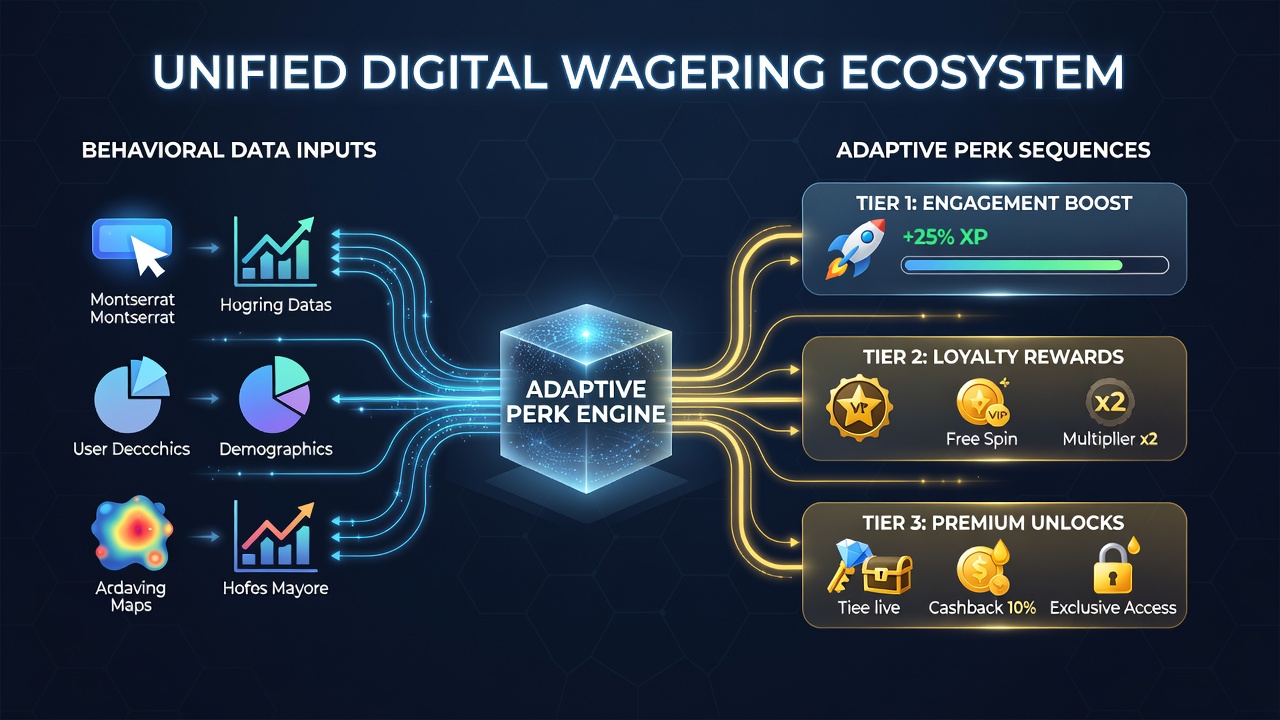
Operators in digital wagering environments collect extensive player activity records that include session duration, wager types, frequency patterns, and game preferences, then apply these datasets to construct perk sequences that adjust in real time based on observed behaviors. This mapping process connects raw interaction logs to reward structures that evolve as users move through different verticals such as sportsbooks, casino tables, and poker rooms within single unified accounts.
Behavioral Data Collection Methods
Platforms gather information through integrated tracking systems that log every interaction across devices, allowing analysts to identify clusters of activity such as repeated sports bets during specific time windows or shifts toward table games after certain loss thresholds. Researchers have documented how these systems segment users into categories like high-frequency mobile players or cross-vertical participants, with data points aggregated at both individual and cohort levels to inform sequence generation. According to industry reports from the American Gaming Association, operators now process billions of such data points monthly to refine personalization engines that respond to live inputs rather than static profiles.
Adaptive Perk Sequence Construction
Once behavioral profiles form, algorithms generate perk sequences that unlock in stages tied to demonstrated patterns, for example advancing a user from deposit-match offers to free spin allocations or tournament entry credits when their activity matches predefined progression criteria. These sequences adapt when new data arrives, so a player who begins favoring esports titles might receive targeted incentives that bridge to poker freerolls, whereas one focused on prediction markets sees sequences weighted toward event-specific bonuses. The construction relies on decision trees and reinforcement models that update continuously, ensuring the next perk reflects the most recent activity cycle without requiring manual intervention.
Integration Across Unified Ecosystems
Unified platforms consolidate sports, casino, and poker data streams into single repositories, which enables sequences to span vertical boundaries instead of remaining siloed within one product. A user completing a mobile sports wager might trigger an adaptive offer that carries over to casino play within the same app session, with the sequence adjusting if the player switches devices or pauses activity. This connectivity supports synchronized incentive delivery, where behavioral signals from one area modify available rewards in another, creating continuous engagement loops that operators track through unified dashboards.
Studies from academic sources such as the University of Nevada Reno's gaming research division indicate that cross-vertical data mapping increases session continuity when sequences respond to multi-product patterns rather than isolated metrics. Operators implement these mappings through APIs that pull real-time feeds, allowing perk adjustments to occur within seconds of behavior changes while maintaining compliance with jurisdictional data handling rules.
Technological Frameworks and June 2026 Developments
Modern implementations combine cloud-based analytics platforms with edge computing nodes that process behavior signals closer to the user device, reducing latency in sequence updates during live events. In June 2026, several major operators expanded these frameworks to incorporate prediction market activity alongside traditional sports and casino data, creating sequences that adapt when users engage with election or event contracts. These expansions draw on machine learning pipelines that test multiple sequence variants against control groups to measure uplift in retention metrics before full deployment.
External regulatory bodies including the Nevada Gaming Control Board have issued guidance requiring transparent documentation of how behavioral inputs translate into perk outputs, prompting operators to maintain audit logs that detail each mapping decision. The process also incorporates geographic restrictions, so sequences respect state-specific rules while still drawing from unified datasets across permitted regions.
Compliance and Privacy Considerations
Data protection regulations require explicit consent mechanisms and anonymization techniques before behavioral records feed into perk algorithms, with operators applying differential privacy methods to prevent individual identification during sequence generation. European regulators outside the UK have required impact assessments for such systems, and Canadian provincial authorities have adopted similar review processes for platforms operating within their jurisdictions. These frameworks ensure that adaptive sequences respect user opt-out preferences without disrupting overall ecosystem functionality.
Conclusion
Mapping behavioral data to adaptive perk sequences continues to evolve as unified wagering platforms integrate additional data streams and refine their analytical capabilities. Operators rely on established collection, modeling, and compliance practices to maintain functional sequences that respond to player activity across sports, casino, and poker environments. Ongoing regulatory updates and technological enhancements shape how these systems operate through 2026 and beyond, with data sources from multiple jurisdictions informing consistent implementation standards.